Meta Description: Discover WhatsApp Business Calling API for seamless VoIP integration in chats. Cut costs 50%+, boost engagement 2x. Start with BotSpice.
Key Takeaways:
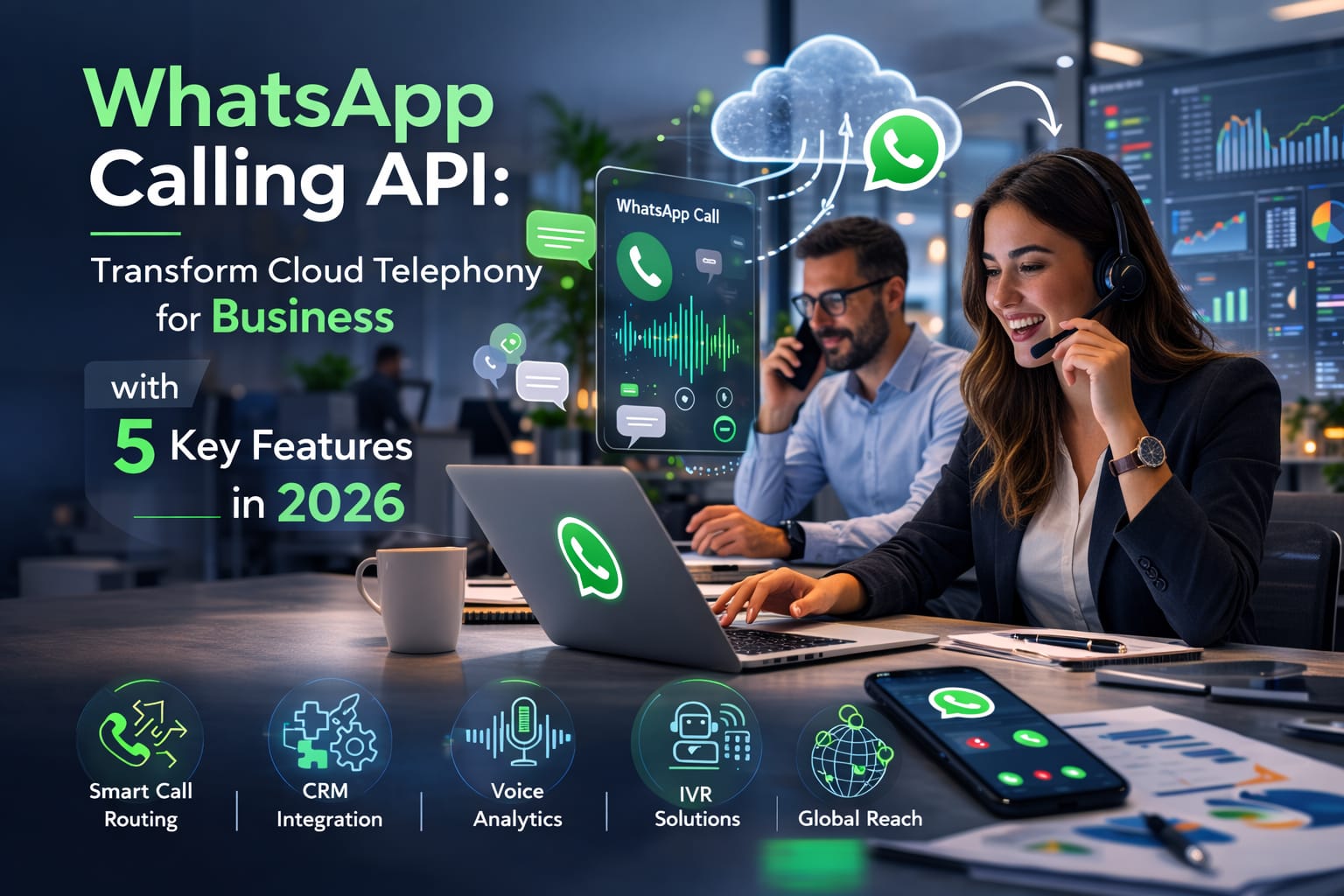
- Cut telephony costs 50%+ by shifting to conversation-based pricing (~₹0.50-1.50 per 24-hour window) instead of per-minute PBX charges, with free tiers for 1000+ monthly conversations.
- Eliminate app-switching friction through seamless in-chat VoIP calls via WebRTC, preserving full chat context to boost engagement 2x and slash resolution times by 40%.
- Achieve effortless scalability with Cloud API auto-routing to 2B+ WhatsApp users, handling peak loads (like Diwali surges) without provisioning new lines or infrastructure.
- Solve compliance headaches using built-in opt-in mechanisms and metadata audit trails, ensuring GDPR/CCPA/DND adherence while lifting answer rates by up to 35%.
- Unlock rich personalization by attaching chat history, custom metadata, and real-time analytics (duration, drops, conversions) to every call for up to 25% ROI gains.
- Go global instantly with multi-device support (mobile/desktop), low-latency handover, and no country-specific numbers — ideal for India’s 500M+ WhatsApp users.
As a technology manager or a procurement decision-maker, you’ve likely experienced the frustration of customers abandoning support tickets because they had to switch from WhatsApp chats to phone calls. Your PBX system queues them for minutes while your chat agents sit idle with full context.
What if voice calling could happen seamlessly within WhatsApp itself? No app-switching, no dropped context, just natural conversation flow from text to voice.
WhatsApp Business Calling API, launched by Meta in 2025, makes this reality through Cloud API and cloud telephony integration. Over 2 billion users already trust WhatsApp daily, particularly in high-mobile markets like India (500M+ active users). For businesses, this means transforming customer care from fragmented silos into unified, scalable experiences. In this guide, we’ll explore 5 key features that address your biggest pain points such as rising costs, poor scalability, compliance risks, and show how to implement them effectively.
The Telephony Challenges Companies and Tech Leaders Face Today
Before diving into solutions, let’s acknowledge the reality. Traditional telephony eats 30-40% of operations budgets with per-minute charges and hardware maintenance. During peak hours, call queues overwhelm agents while customers churn to competitors. Multi-channel fragmentation drops engagement by 30-50% as users bounce between apps, emails, and IVR systems. Compliance adds another layer; GDPR, CCPA, and India’s DND regulations demand explicit consent, yet legacy systems struggle with audits.
WhatsApp Calling flips this equation.
Built on Cloud API with WebRTC/SIP protocols, it enables voice (and video) calls directly in chats. No new phone numbers needed; leverage existing WhatsApp Business Accounts (WABA). Costs shift to conversation-based pricing (~₹0.50-1.50 per 24-hour window in India), with free tiers for 1000+ conversations monthly. Let’s break down the 5 standout features.
Key Highlights: 5 WhatsApp Calling Features That Deliver ROI
1. Seamless In-Chat VoIP Calls – Eliminate App-Switching Forever
Imagine a customer midway through troubleshooting their order in WhatsApp. Instead of “Please call our support line,” your agent clicks “Call Now” from the chat interface. The customer receives an in-chat ringing notification—answer, and the call begins with full chat history visible on both screens.
This isn’t magic; it’s WebRTC-powered VoIP via the Cloud API’s /calls endpoint. Agents send POST requests with parameters like callee (customer phone), call_type (voice/video), and custom metadata (order ID, issue type). Webhooks notify real-time status: incoming_call, answered, ended. Businesses using partners like Infobip report 40% faster resolutions and 2x engagement uplift because context never breaks.
2. Cloud Telephony Integration – Scale Without PBX Headaches
Your current PBX handles inbound calls but chokes during Diwali sales spikes. WhatsApp Calling integrates via SIP trunks or Asterisk/FreePBX, routing calls to your cloud infrastructure while Meta handles global signaling.
POST to /calls with sip_endpoint parameter, and incoming calls trigger webhooks to your SIP server. Use libraries like Pipecat for WebRTC streams; no media servers needed. Costs can drop 50%+ versus traditional VoIP; Meta’s edge network ensures <150ms latency worldwide. During peaks, auto-scale without provisioning lines, making it perfect for India’s 500M+ WhatsApp users.
3. Opt-In & User-Initiated Calls – Compliance Built In
Unsolicited calls trigger churn and fines. WhatsApp mandates opt-in: customers tap “Call Me” buttons in chats, generating consent metadata logged via API. Your system controls permissions per WABA, ensuring GDPR/CCPA compliance.
For outbound, send call invites as interactive messages. Inbound calls hit your webhook only from opted-in users. This boosts answer rates 35% and the calls feel actually helpful, not intrusive. Legal teams love the audit trail: every call links to a chat consent timestamp.
4. Rich Call Metadata & Analytics – Personalize at Scale
Generic calls waste time: “How can I help?” WhatsApp attaches full chat history, custom fields (customer tier, past issues), and call metrics to every session. POST /insights queries duration, drop rates, conversions and benchmark against industry peers.
You can easily feed this to a CRM for up to 25% ROI gains. No more “blind” agents because of scripts auto-loaded based on chat context.
5. Global Multi-Device Reach – 24/7 Without Borders
Support teams in Delhi handling US queries? WhatsApp’s 1B+ daily users span devices with seamless handover: start chat on mobile, switch to call on desktop. Group calls (up to 8) suit demos; video since 2025 updates.
No per-country numbers with global routing via Cloud API. In India, bypass DND for opted-in business hours. Hybrid teams get webhooks across platforms, ensuring continuity.
Implementation Comparison Table
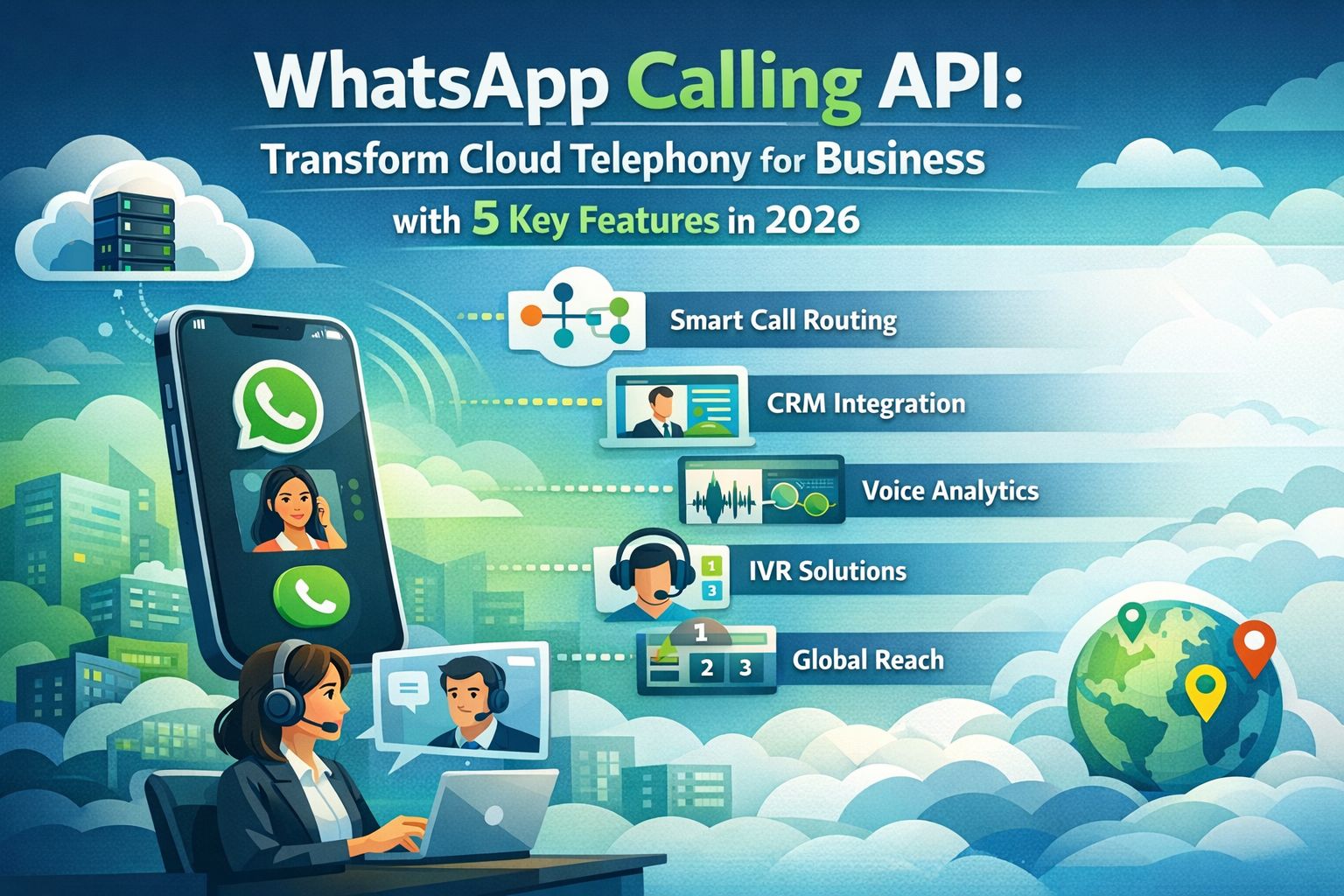
See how WhatsApp Calling API stacks up against traditional telephony with faster setup, lower costs, and smarter scaling make it a no-brainer upgrade for tech teams.
| Feature | Traditional Telephony | WhatsApp Calling API |
| Setup | Weeks, hardware/SIMs | Just hours via Cloud API |
| Pricing | Per-minute + infra costs | Conversation-based |
| Scalability | Fixed queues | Auto-scale (2B+ users) |
| Analytics | Basic CDRs | Rich metadata + Insights API |
| Compliance | Manual opt-outs | Native opt-in webhooks |
Ready to Unify Your Customer Communications?
If telephony silos are holding back your operations, BotSpice delivers WhatsApp Calling API integrations with no-code tools (automated opt-ins, SIP routing, analytics dashboards) for customer care at scale. Trusted by clients across industries, our solutions can slash setup time 70% and lift CSAT by around 40%.
Explore BotSpice Customer Care and book a free demo today. Transform “hold music annoyance” into seamless conversations that your tech stack (and customers) will thank you for.
Frequently Asked Questions (FAQs)
1. How does WhatsApp Calling API help reduce customer churn during peak seasons?
Peak periods like festive sales can overwhelm support lines, leading to frustrated customers who simply hang up and switch providers. WhatsApp Calling addresses this by enabling seamless, in-chat voice connections that keep customers engaged within their preferred app without waiting in endless IVR queues. As a result, businesses can see up to 40% fewer abandoned interactions, preserving customer loyalty.
2. What kind of ROI can tech managers realistically expect from implementing WhatsApp Calling?
Companies integrating WhatsApp Calling can potentially cut telephony expenses by 50% or more through conversation-based pricing, while engagement metrics jump 2x from contextual calls that can resolve issues 40% faster. Add in analytics-driven optimizations like spotting high-drop patterns to refine agent scripts, and you’re potentially looking at 25% overall ROI within a few months.
3. How much does WhatsApp Calling actually cost for Indian businesses?
Unpredictable per-minute telephony bills that balloon during peak seasons and eat into your budgets. With WhatsApp Calling API, Meta shifts everything to a simple conversation-based model, charging just ₹0.50-1.50 per 24-hour window regardless of call length. You get a generous free tier covering 1,000 conversations monthly, and when you layer on minimal SIP provider fees, businesses typically save 60-70% compared to traditional IVR systems.
4. Can I migrate my entire PBX to WhatsApp Calling?
WhatsApp Calling makes migration straightforward and low-risk, especially for SMBs who can go fully cloud-native with simple SIP connections that route everything through WhatsApp’s massive user base. For larger enterprises, a hybrid approach works well: handle 70-80% of interactions via WhatsApp while keeping legacy fallbacks for edge cases, all manageable in 1-2 weeks with the right partner like BotSpice.
5. Does it support video calls and group calling?
WhatsApp Calling has full video support and group calls for up to 8 participants, launched in recent updates to make these interactions feel effortless and natural. It includes smart bandwidth checks to avoid dropouts, plus mandatory opt-ins that keep everything compliant and customer-friendly—ideal for live demos, troubleshooting sessions, or executive briefings that close deals faster without forcing anyone onto unfamiliar platforms.